Pharmacy robots are moving toward a quieter job: counting, storing, labeling, and moving medicines while staff handle clinical decisions. The next stage will depend less on robot speed and more on how well each system fits the pharmacy’s software, storage rules, and safety checks.
Quick read
- Robots will take on more stock movement and dose preparation inside pharmacies.
- Barcode checks, camera systems, and software links will matter as much as the robot arm.
- Human staff will still handle exceptions, patient questions, and final clinical judgment.
From dispensing machines to connected systems
A pharmacy robot may start with one task, such as placing packaged medicines into storage. Its real value grows when the storage system connects to the pharmacy management system, which holds the prescription and stock records.
That link lets software send a medication order to the correct storage location. A barcode reader can check the package before the robot moves it, while a camera can confirm the label and package shape. The system then records what happened for a pharmacist to review.
This setup changes the job from “robot fills a prescription” to a chain of checks. An order enters the system, stock is located, the package is picked, the label is checked, and the completed item moves to a pickup area or delivery point.
The handoff is where a wrong label or package can reach a patient. A report from Robot24 can show how pharmacy systems handle stock, labels, order checks, and human review. Those details lead into the tasks these machines may take on next.
Where robots will do the most work
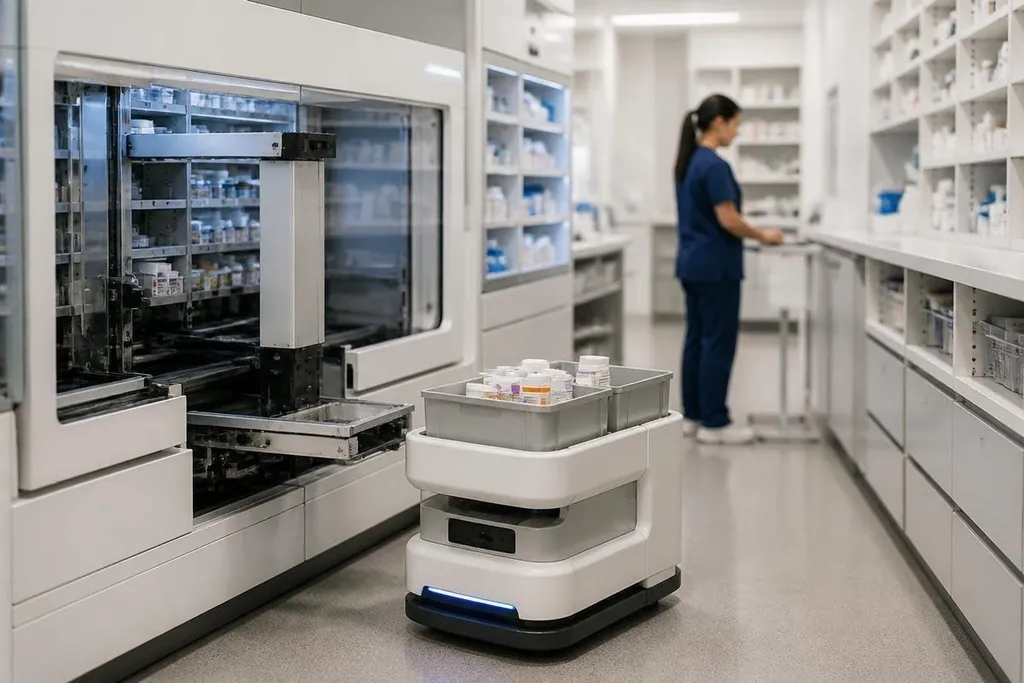
The strongest fit is repetitive movement inside a controlled space. Inside that space, a robot can carry sealed packages between shelves, prepare unit-dose packs, sort orders by delivery route, or load an automated dispensing cabinet.
Unit-dose packaging means one prepared dose in a labeled package. Hospitals use this format because staff can check each dose before it reaches a patient-care area. The machine can help with the repeated handling, while a pharmacist checks the order and the label.
Storage is another practical area. A pharmacy may need separate handling for room-temperature stock, refrigerated medicines, controlled drugs, and items close to their expiry date. Robots can place stock in assigned locations and record each movement.
The storage design still decides what the system can handle. This matters during busy periods because staff can spend less time walking to shelves and more time checking unusual orders, speaking with patients, or calling a prescriber about a problem.
The hard parts are outside the demo
Medicine packaging varies by maker, size, shape, and label. A robot built around one package type may need new grippers, storage bins, or software rules when the pharmacy changes suppliers.
Returns also create work. A package may leave storage, reach a pickup point, and then come back because the patient did not collect it. The system needs a safe rule for inspection, storage, or disposal.
It can move the package, but it cannot decide whether the medicine is fit for use without a defined process and human review.
Cold storage adds another limit. Refrigerated medicines need the correct temperature during storage and movement. The system must include temperature checks, alarms, and a response plan when equipment fails.
Software links can cause trouble too. Pharmacy systems, hospital records, payment tools, and stock databases may use different data formats. One that works well on its own can still slow staff down if an order needs manual entry at each step.
What pharmacy staff will still own
Robots can check a barcode against an order. They can't replace a pharmacist deciding whether a dose fits a patient’s treatment, spotting a dangerous combination, or explaining how to take the medicine.
The human role may shift toward exception handling. That includes damaged packaging, missing stock, unclear instructions, failed barcode scans, and orders that need a clinical decision. A system that sends every unusual case to a pharmacist without useful details will create a new queue instead of removing one.
I’d judge a pharmacy robot by the quality of that exception process before its headline speed.
A buying checklist for pharmacy leaders
Before choosing a system, check these points:
- Package range: List the package sizes, shapes, and label types the robot can handle.
- Cold storage: Confirm temperature monitoring, alarm records, and the failure procedure.
- Software link: Ask how prescriptions, stock counts, returns, and audit records move between systems.
- Human checks: Map who reviews a barcode failure, damaged pack, controlled drug, or unclear order.
- Service work: Find out who replaces grippers, scanners, labels, and other parts during a fault.
- Exit plan: Confirm how staff can retrieve medicines if the robot or software stops.
The pharmacies that gain the most may be the ones with clear stock rules and steady order flows. A robot cannot repair poor data, unclear storage, or a process that staff already struggle to follow.
The next useful test is a full shift with normal orders, returns, package changes, and system faults included. Until a pharmacy can show those results, the robot is a promising piece of equipment, not a finished answer.